
Concrete Driveway Cracks in Florida: Why They Happen and What Actually Fixes Them
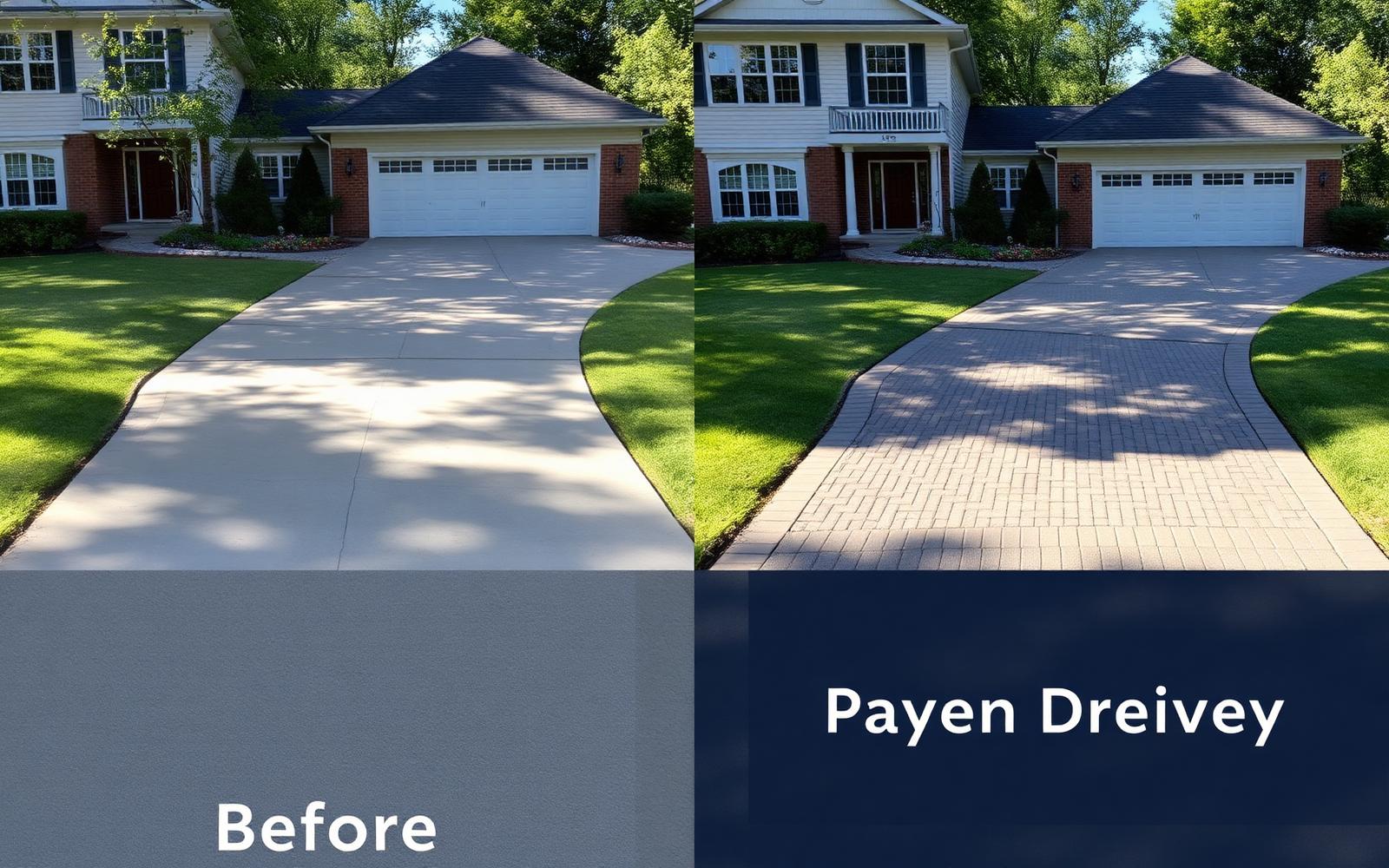
Every concrete driveway cracks eventually. The question is whether yours is normal aging, a control joint working as designed, or a sign that something underneath has failed.
Concrete cracks. That part is not negotiable.
Concrete is strong in compression and weak in tension. As soon as the slab cures it starts pulling against itself, and any small movement underneath creates the kind of stress concrete cannot absorb. The result is a crack. Every concrete driveway you have ever walked on has them, even if you have to look closely to find them.
What matters is which kind of crack you have, because the repair path is completely different for each. Hairline shrinkage cracks are cosmetic. Control joint cracks are by design. Settlement cracks and structural cracks are actual problems that need real intervention.
The four cracks you will see in Florida
Hairline shrinkage cracks appear within the first year as the concrete loses its remaining moisture. They are usually thinner than a credit card and follow no logical pattern. Cosmetic only.
Control joint cracks follow the saw cut lines that should have been placed every ten to twelve feet. The joint is there specifically to give the slab a place to crack on a straight line. If you see a clean crack inside a control joint, the joint did its job.
Settlement cracks appear when the soil under the slab moves down. They are wider than hairlines, often with one side of the crack lower than the other. South Florida sandy and limerock soils settle when the base under the slab was undercompacted or when irrigation washed material out from underneath.
Structural cracks run across the slab in irregular paths, often wider than a quarter inch, sometimes with active movement under load. They mean the slab is failing as a structural member.
Why your driveway cracked in the first place
In our experience the top three causes in South Florida are bad base prep, missing or shallow control joints, and tree roots. Bad base prep is the original sin. Concrete poured on uncompacted fill or on soft organic soil cannot stay flat. We see it on a lot of older houses where the original driveway went down quickly and cheaply.
Missing control joints turn the entire slab into a single brittle plate. Without planned joints the concrete cracks where the stress wants to release, which is rarely where you want a visible line. Tree roots from ficus, banyan, and royal poinciana lift slabs from below. Once the lift starts the crack follows.
If you are weighing repair against full replacement, the framework is in our guide on resurfacing versus replacing your driveway.
What real repairs look like
Hairline cracks get cleaned and filled with a flexible polyurethane crack sealer. The fill flexes with the slab and keeps water out. We tint to match the existing concrete color so the line disappears at normal viewing distance.
Control joint failures get the joint cleaned, the cracked area opened slightly with a saw, and a self leveling joint sealant installed. This protects the joint from water intrusion and stops the crack from widening.
Settlement cracks need the underlying void filled before the surface is repaired. We use polyurethane foam injection to lift the slab back into plane and then fill the surface crack. Done correctly the slab returns to its original level and stays there.
Structural cracks rarely justify a repair. By the time a slab is failing structurally, the right move is usually full removal and a new slab, or a switch to pavers. Pavers handle ground movement by flexing instead of cracking, which is a real advantage on settlement prone sites. The full comparison is in pavers versus concrete in Florida.
When epoxy injection is a waste of money
Epoxy crack injection is sold heavily in the consumer market because it sounds permanent. In a residential driveway exposed to Florida sun and ground movement, rigid epoxy in a flexible slab causes a new crack right next to the old one within a couple of seasons. Polyurethane sealants flex. Epoxy does not. Use the right material for the substrate.
Skim coat overlays are another common waste. A thin layer of new concrete over a cracked slab telegraphs every crack back through within a year, sometimes within months. If the underlying slab is moving, no overlay holds.
Cost ranges in 2026 South Florida
Crack sealing on a typical residential driveway runs three hundred to nine hundred dollars depending on length and complexity. Polyurethane lifting on a settled slab runs eight hundred to twenty five hundred dollars per affected section. Full slab replacement runs nine to fifteen dollars per square foot installed.
If your driveway is at the end of its life and you are considering pavers instead of new concrete, get an apples to apples quote on both. Many of our paver projects start as concrete repair calls that turned into a smarter long term decision.
Frequently asked questions
Almost never. Shrinkage hairlines in the first twelve months are normal. Seal them to keep water out and move on.
Hairlines yes. A tube of polyurethane crack sealer from a hardware store and a steady hand will do it. Settlement cracks and structural cracks need professional equipment to lift, fill, and finish properly.
If the underlying cause is fixed, no. If the base is still moving, the crack returns or moves a few inches over. We always diagnose the cause before quoting a repair.
Get a free quote from Bedrock.
Residential and commercial. Licensed, bonded, insured.