
Pressure Washing Pavers in Florida: How to Clean Without Wrecking the Joints
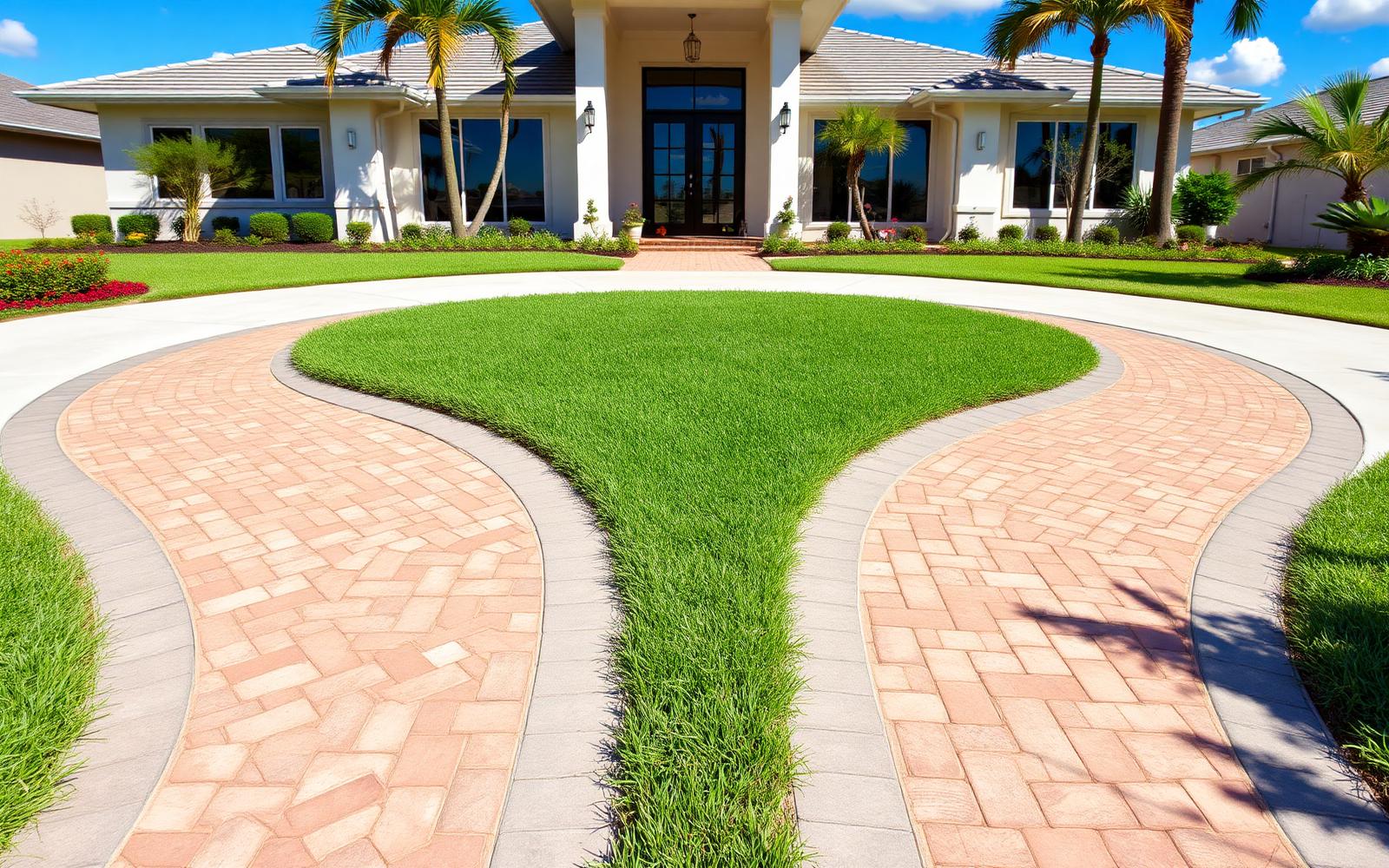
Pressure washing is the fastest way to make a paver driveway look new and the fastest way to destroy the joints if you do it wrong. Here is the playbook we use on every cleaning job.
What pressure washing actually does
A pressure washer pushes water at three thousand to forty two hundred pounds per square inch. That force lifts dirt, mildew, oil, and old sealer off the paver surface in seconds. The same force, used carelessly, blasts polymeric joint sand straight out of the joints, etches the paver face, and exposes the bedding sand to wash out.
Most homeowners overcorrect after the first pressure wash. The driveway looked great for a week and then the joints were gone, weeds came back fast, and a few pavers started rocking. The wash itself was not the problem. The technique was.
The right pressure and the right tip
On concrete and brick pavers we use a fifteen degree fan tip at fifteen hundred to two thousand PSI, held twelve to eighteen inches off the surface, sweeping at a steady pace.
On travertine and marble we drop to a twenty five degree tip at twelve hundred to fifteen hundred PSI, held eighteen to twenty four inches off the surface. Anything more aggressive opens the natural pores and pulls minerals from the stone.
Zero degree tips have no place on any paver field. Ever. The force concentrates to a needle and either chips the stone or cuts a visible track in the paver face that never disappears.
Cleaner before pressure
A neutral pH paver cleaner does ninety percent of the work. We apply it diluted, let it dwell for ten minutes, then rinse at the lower pressure described above. The chemical lifts the dirt. The water carries it off. That order matters.
For oil and tire stains we pre treat with a degreaser specifically rated for concrete or stone. Anything stronger pulls color out. For mildew on shaded sections we use a sodium hypochlorite solution at one to four with water, which kills the spores at the root.
How to protect the joints during the wash
Sweep the field dry first to remove loose grit. Wet down adjacent landscape and pavers off the work area to keep cleaner from drying on stone. When pressure washing, hold the wand at a forty five degree angle and move along the joint, never across it. Crossing the joint perpendicular blasts sand directly out.
Plan to re sand after the wash. Even a careful pressure wash removes some joint material and the polymeric binder needs to be refreshed for the field to lock again. The full re sanding process is in the polymeric sand guide.
What goes wrong and how to fix it
The most common failure is using a turbo nozzle on the first pass. The rotating water cone looks fast and fun and it cuts the paver face within a few seconds. Stop the moment you see the surface change tone. The damage is permanent.
Stripped joint sand is fixable. Sweep new polymeric sand into the cleaned joints, mist according to the manufacturer instructions, and let cure for seventy two hours before any traffic.
Sunken pavers after a wash are a sign that the bedding sand was already migrating before you started. The wash just exposed it. The repair process is detailed in fixing a sunken paver driveway.
How often to wash and re seal
Most South Florida driveways look best with a full wash once a year, scheduled in spring before pollen season ends. Pool decks and patios in heavy use can benefit from a light wash every six months.
Re sealing follows the wash. We typically re seal concrete pavers every three to five years, travertine every two to three years, and brick on a similar cycle to concrete. The full sealing schedule is in the Florida paver sealing guide.
Hire it out or do it yourself
If you own a quality electric or gas pressure washer with adjustable tips, a paver wash is a doable Saturday project. Block out four to six hours for a typical driveway. Buy a paver specific cleaner, not a generic concrete degreaser. Re sand when you finish.
If you are renting equipment, calculate the cost. Rental of a commercial unit, cleaner, polymeric sand, and a sealer pass usually lands at four hundred to six hundred dollars in materials and rental. A professional wash, re sand, and seal typically runs eight hundred to fifteen hundred dollars on a four car driveway. The price difference is small and the warranty on the work is real.
Frequently asked questions
Partially. A high quality paver wash will lift loose surface sealer and prep the field for a new coat. Stripping a fully cured sealer requires a chemical stripper, not just water.
Diluted sodium hypochlorite is fine on mildew when rinsed thoroughly. Straight bleach can pull color and damage adjacent landscape. Test in an inconspicuous corner first.
Wait twenty four to forty eight hours of dry weather. Sealer applied to a damp paver field traps moisture and turns cloudy white.
Get a free quote from Bedrock.
Residential and commercial. Licensed, bonded, insured.