
Driveway Expansion Joints: Why They Matter and Where They Go
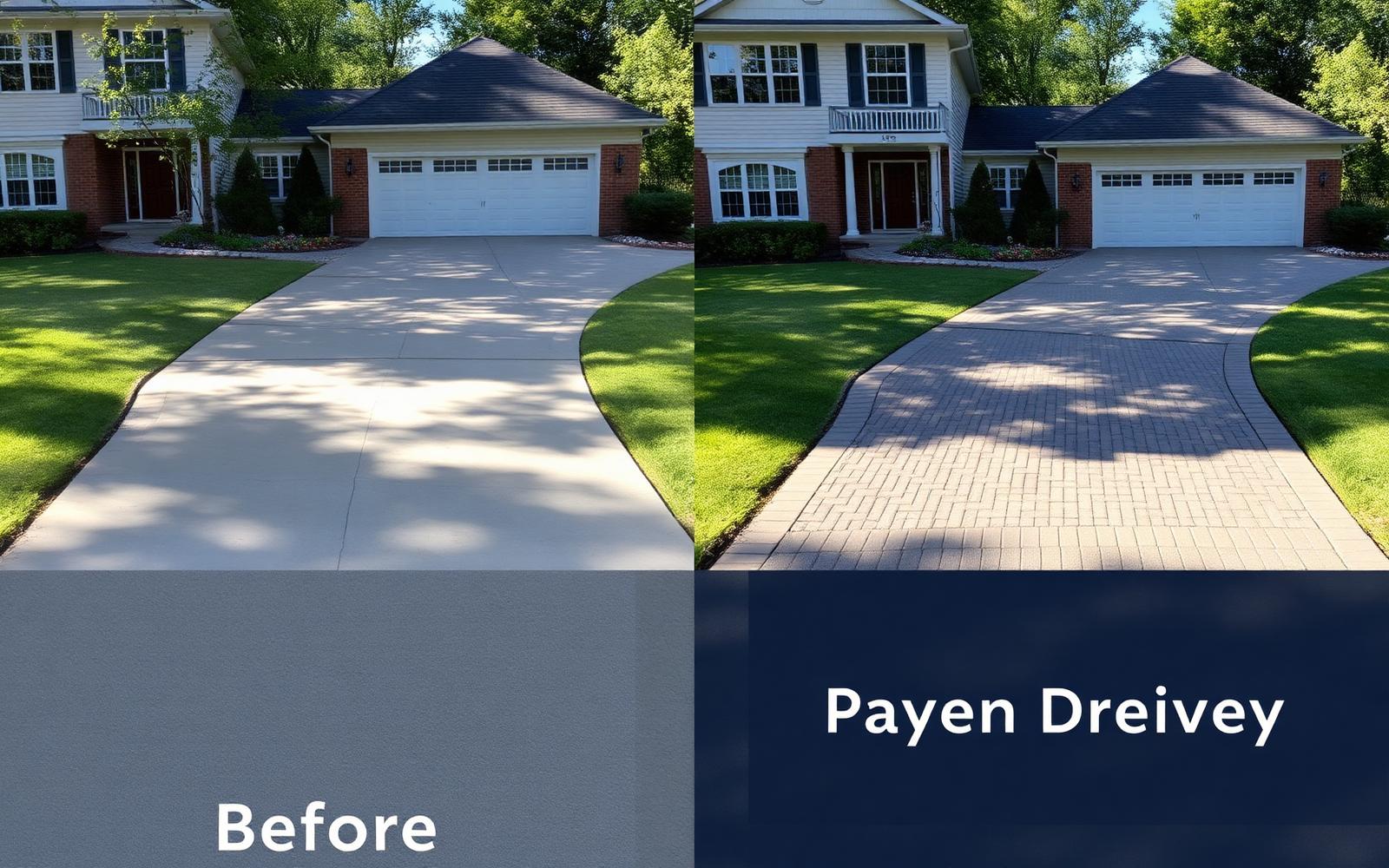
Expansion joints are the cuts and breaks that let your driveway move without cracking. Here is how they work in concrete and what the equivalent looks like in pavers.
Concrete moves whether you plan for it or not
A poured concrete slab expands in heat, contracts in cold, and shrinks slightly as it cures. South Florida temperature swings between dawn and afternoon are big enough to cause real movement across a slab. Without planned breaks, the movement creates random cracks wherever the stress wants to release.
Expansion and control joints are how a contractor tells the slab where to crack. Done correctly, the joints absorb the movement, the slab stays visually clean, and small cracks that do appear are confined to the joint line.
Two different joint types and why both matter
Control joints are saw cuts or tooled grooves placed every ten to twelve feet across the slab, cut about a quarter of the slab depth. They create a weakened plane where any cracking is likely to happen, and the crack stays inside the joint line and out of view.
Expansion joints are full thickness breaks filled with a flexible material like preformed foam or rubber. They go where the slab meets a wall, a building, or a separate slab. They allow the entire slab to move independently of the adjacent structure without transmitting force.
Where joints belong on a typical driveway
On a standard residential concrete driveway we place control joints every ten feet, in a grid that respects the overall shape. We place expansion joints where the driveway meets the garage slab, the sidewalk, and any walkway.
Skipping joints to keep the surface looking smooth is the most common cause of irregular cracking we see in older South Florida driveways. The cracks would have been hidden inside joints if joints had been planned. The repair logic for those cases is in the concrete driveway cracks article.
How pavers handle the same problem
Pavers do not need expansion joints because the entire field is composed of thousands of small units that can move independently. Each joint between pavers acts as a microscopic flex point, and the field absorbs movement that would crack a single slab.
This is one of the structural advantages pavers have over concrete in environments with active soil movement, tree root pressure, or settlement. The field flexes slightly and stays intact. The big picture comparison is in pavers versus concrete in Florida.
Joint maintenance on concrete driveways
Expansion joints need attention every few years. The flexible filler material breaks down under UV and weather. Once it fails, water enters the joint, freezes and thaws less of an issue here than further north but still causes degradation, and the joint widens or settles.
We refresh expansion joints with self leveling polyurethane sealant rated for traffic. The cost is small and the protection it offers the surrounding slab is significant.
What goes wrong on cheap concrete jobs
Cheap concrete crews sometimes cut control joints too shallow, too far apart, or not at all. Cracks then appear along random paths within the first year or two. The repair options for those slabs are limited and usually involve overlay or full replacement.
Always ask a concrete contractor how often they will cut control joints, how deep, and how soon after the pour. Same day cuts done with a soft cut saw are the standard for residential work in South Florida.
When to consider pavers instead
If your lot has known settlement issues, large trees with active root systems, or a long history of cracked driveways, pavers are usually the better long term answer. The field handles movement, individual stones can be lifted and reset if needed, and the long term cost of ownership tends to be lower.
If you stay with concrete, demand a clear joint plan in writing, and insist on proper base prep underneath. The base spec is in the Florida base prep guide and applies to both materials.
Frequently asked questions
Every three to five years on a typical South Florida driveway. UV and traffic break down the filler over that period.
Yes, with a wet saw and a steady hand. Retroactive joints help relieve future stress but they will not undo cracks that already happened.
On very large fields or where pavers meet a different surface like a concrete apron, we sometimes plan a slightly wider expansion gap with flexible filler. On standard residential paver fields the natural joints handle all the movement.
Get a free quote from Bedrock.
Residential and commercial. Licensed, bonded, insured.